


Fascia/Myofascial Release/Manneuvers

THE FASCIA GUIDE -why is Fascia Fascinating
Nikola Tesla:"If you want to find the secrets of the universe, think in terms of energy, frequency and vibration"
What fascia actually is-a single, uninterrupted sheet of connective tissue running from scalp to sole. It wraps every muscle, bone, organ and nerve into one communicating system — if you strip everything else away it alone would still hold a recognizable human shape.
Liquid-crystal consistency
Fascia isn't solid, it behaves like a liquid crystal, closer to honey than rope.
That's what lets it flow and reshape under slow, sustained pressure instead
of simply resisting it.
Piezoelectric
Fascia generates its own small electrical charge in response to pressure,
temperature and vibration — part of how touch, heat and sound genuinely
change the tissue, not just how it feels.
Densely innervated
Fascia is among the most richly innervated tissue in the body — far more
than muscle — making it a primary organ of proprioception and a direct line
to the nervous system. It rebuilds with the right pressure. Gets remodeled in
direct
response to physical signal. Tissue that tightened under bad habits can rebuild
under good ones.
Sedentary lifestyle restricts it. Nothing about modern daily life was built with
fascia in mind.
* Shoes → duck feet. Twenty-six bones and hundreds of muscles, immobilised
in cushioned{often elevated} shells — the plantar fascia hardens and the toes
drift outward.
* Sitting → pelvic tilt, hip flexors shorten, the front fascial line tightens, the
pelvis rotates forward, compressing the lower back.
*Screens → forward neck. The neck holds the head forward for hours a day.
Over time the cervical fascia calcifies, and the head stops sitting over the body.

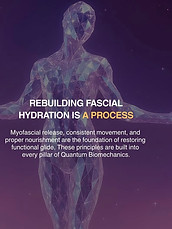


Aging is not what you think it is. Most of what looks like aging is fascia drying out, shortening, restricting.” BUT Fascia doesn't stretch — it glides.
Feeling “tight” rarely means a muscle is too short. Healthy fascia glides; restricted fascia binds and drags. Healthy fascia layers glide across each other like wet silk/honey.
When tissue dehydrates or compresses, those layers start sticking — producing the pulling, stuck feeling most people mistake for a short muscle.
Neurological guarding
When the brain doesn't trust a joint or movement, it locks down the surrounding tissue to protect it. That "tight" sensation is often a brake, not a lack of flexibility — which is why passive stretching alone rarely holds.
Rehydration through rhythm
Fascia rehydrates through rhythmic compression and release — like a sponge — not through long static stretches. Movement that pulses, spirals and loads lightly is what actually restores glide. Glide first, then strengthen. Loading strength on top of stuck, dehydrated fascia just reinforces the restriction. Restoring glide first — then building strength on top of it — is what actually makes movement feel lighter and coordinated.


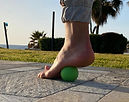


Fascial Manneuvers
self-care system movements, releasing the tension, adhesion, stress
Fascial Maneuvers made you feel less stress, easier to breathe, less tentsion throughout their head and neck and spine.
Empowering others to help themselves.
Releases force and anger stored for years in your body.


Fascia doesn't stretch — it glides Feeling “tight” rarely means a muscle is too short. Healthy fascia glides; restricted fascia binds and drags. Densification Healthy fascia layers glide across each other like wet silk. When tissue dehydrates or compresses, those layers start binding — producing the pulling, stuck feeling most people mistake for a short muscle. Neurological guarding When the brain doesn't trust a joint or movement, it locks down the surrounding tissue to protect it. That "tight" sensation is often a brake, not a lack of flexibility — which is why passive stretching alone rarely holds. Rehydration through rhythm Fascia rehydrates through rhythmic compression and release — like a sponge — not through long static stretches. Movement that pulses, spirals and loads lightly is what actually restores glide. Glide first, then strengthen Loading strength on top of stuck, dehydrated fascia just reinforces the restriction. Restoring glide first — then building strength on top of it — is what actually makes movement feel lighter and coordinated.
Book your Release
Do you wanna come for private session or with your partner, friend, or host a workshop at your place-let's talk